Menu

CT Scan vs MRI: Optimal Tests for Cancer Evaluation in Kiwale

Understanding CT Scans in Cancer Evaluation in Kiwale

When evaluating cancer, a CT scan is often one of the first imaging tests recommended. It provides a comprehensive view of the body's internal organs using X-ray technology. This test is particularly effective in detecting the presence of tumors, identifying their size, and determining their location. It is especially beneficial for evaluating areas where bone and organ detail is crucial, such as in lung or abdominal cancers. With the ability to detect tumors as small as a few millimeters, CT scans play a pivotal role in staging cancer and guiding treatment plans. Another key advantage is its speed; a CT scan typically takes only a few minutes to complete, making it highly efficient for urgent assessments. However, it's important to consider that CT scans involve exposure to ionizing radiation, which could accumulate over multiple scans. Therefore, while CTscan services are
essential, they are generally recommended when the potential health benefits outweigh the risks. Consulting with a qualified healthcare professional, like Dr. Vivek Bande, can provide clarity on whether a CT scan is the right choice for your specific situation.

Exploring MRI Scans for Cancer Diagnosis in Kiwale

An MRI scan is another critical tool in cancer evaluation, offering distinct benefits over CT scans. Unlike CT scans, MRIs do not use ionizing radiation, making them a safer option for certain patient populations, such as those requiring repeated imaging. MRI technology excels in producing detailed images of soft tissues, which are crucial for identifying brain tumors, soft tissue sarcomas, and other cancers that affect soft tissues rather than bone. The ability of MRIs to distinguish between different tissue types enhances the accuracy of tumor detection and evaluation. However, the process is longer compared to CT scans, typically taking about 30 to 60 minutes per session. This can be a consideration for patients who find it difficult to remain still for extended periods. Additionally, the cost of an MRI might be higher than a CT scan, potentially impacting the choice depending
on healthcare coverage and accessibility. Engaging with a trusted medical professional, like Dr. Vivek Bande, ensures you make an informed decision tailored to your health needs.

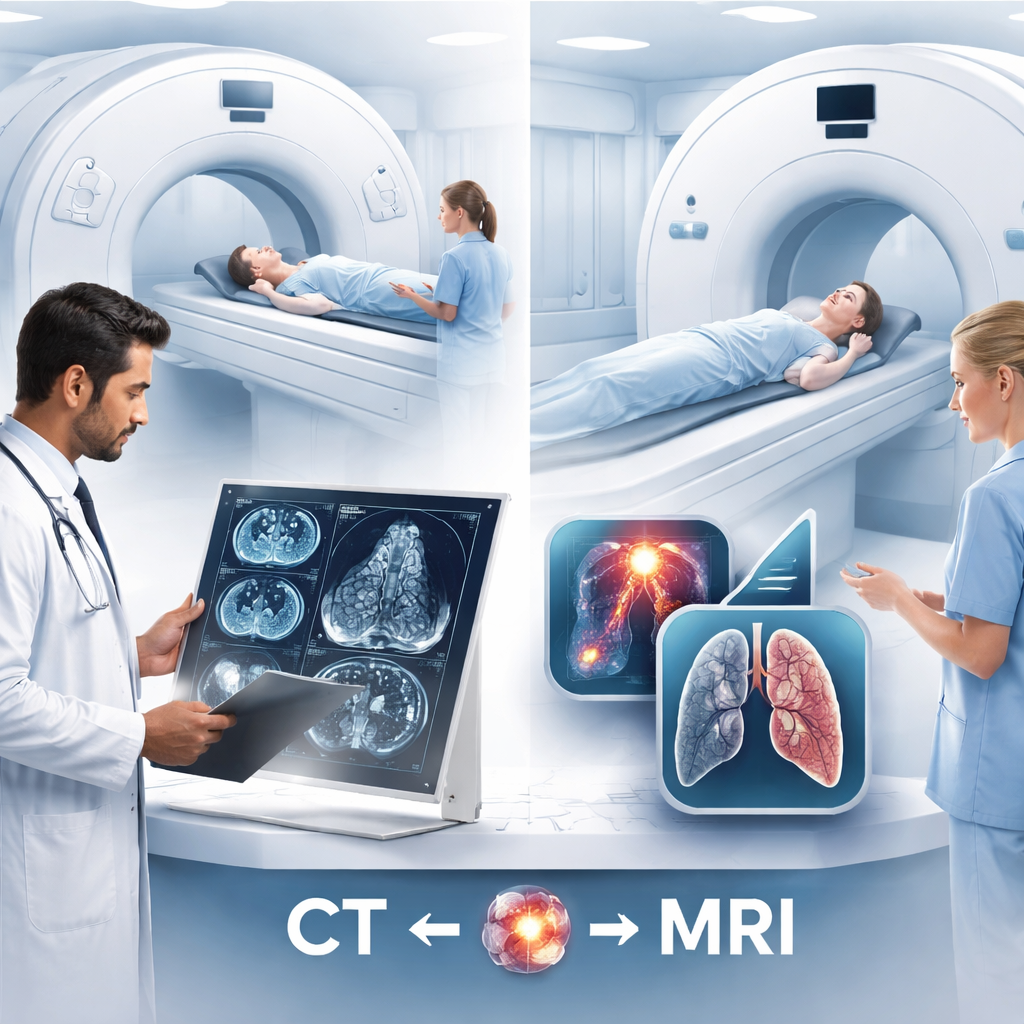
Comparing the Benefits and Challenges of CT and MRI in Kiwale

The choice between a CT scan and an MRI scan for cancer evaluation often depends on the specific clinical context and the patient's unique needs. While CT scans offer rapid and effective scanning methods to visualize bone and organ structures, MRIs provide superior imaging of soft tissues without radiation exposure. For instance, if a patient needs evaluation of a potential spinal issue, an MRI might be favored due to its superior detail of soft tissues and absence of radiation. However, for cases involving trauma or emergency scenarios, a CT scan is preferred for its speed and efficiency. Both imaging modalities have their own set of advantages and limitations, which include considerations of time, cost, and patient compatibility. Factors such as potential allergies to contrast materials used in some CT scans or claustrophobia associated with MRI machines can influence the decision. Ultimately, the decision between these two diagnostic methods should be made in consultation with healthcare providers who can interpret the benefits and risks in view of the patient's entire medical history.

Consulting a Specialist for a Personalized Imaging Plan in Kiwale

With the complexity of cancer evaluations, personalized guidance from healthcare specialists like Dr. Vivek Bande can make a significant difference. Deciding between a CT scan and an MRI scan involves considering multiple factors, including the type of cancer, the stage of diagnosis, and the patient's physical condition. Dr. Bande offers comprehensive consultations to help patients understand the intricate details of each imaging modality. By tailoring recommendations based on individual health profiles and family history, he ensures that each patient receives the most appropriate investigation. Advanced diagnostic tools like CT or MRI contribute significantly to the overall treatment success rate by allowing early detection and accurate assessment of cancer progression. Regular follow-up and detailed discussions with a specialist can also aid in addressing any doubts or concerns, ensuring a clear understanding of the chosen procedure. By working closely with your healthcare provider, you can navigate the decision-making process effectively, optimizing both your immediate and long-term health outcomes.

Frequently Asked Questions

What are the main differences between CT and MRI scans for cancer diagnosis?
While both CT scans and MRI scans are crucial for cancer diagnosis, they differ in technology and application. CT scans are preferred for their speed and ability to image bones and organs, while MRIs offer superior soft tissue detail. Consulting a healthcare specialist will help determine the best choice.
Is an MRI safer than a CT scan for cancer evaluation?
MRI scans do not use ionizing radiation, making them generally safer than CT scans, especially for patients needing multiple follow-ups. However, if immediate results are needed, CT scans may be better suited. Discuss risks and benefits with your doctor, like Dr. Vivek Bande, to make an informed decision.
Why might a doctor recommend a CT scan over an MRI?
Doctors might recommend a CT scan over an MRI if rapid results are required or if the evaluation involves areas like the chest or abdomen. CT scans provide detailed images that are crucial for quick decision-making in emergencies. Consulting with your healthcare provider ensures that all factors are considered.
Can MRI scans detect all types of cancer effectively?
MRI scans are excellent for detecting soft tissue cancers but may not be as effective for certain types needing bone imaging, like lung cancer. They provide detailed images without radiation, but consulting an expert like Dr. Vivek Bande helps you choose the right test based on your specific cancer type.
How do patient factors influence the choice between CT and MRI?
Patient factors such as allergies to contrast material, pregnancy, and specific health conditions influence the choice between CT and MRI scans. Factors like these, along with the type and stage of cancer, play a role in determining the best imaging option. A personalized consultation with a specialist is essential.
Call Us Now
Chat With Us