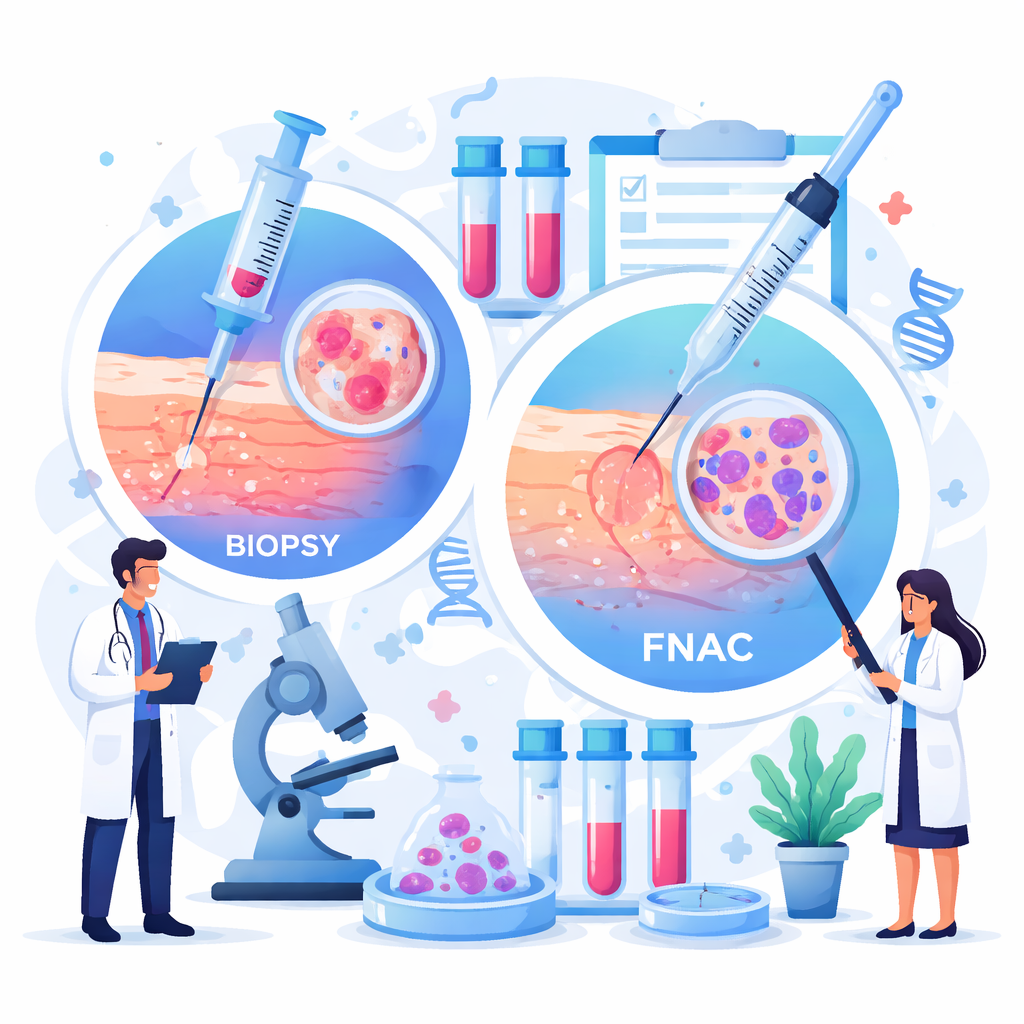
Biopsy vs FNAC: Which is Right for You? - Consult Dr. Vivek Bande in Hinjewadi
Understanding the Basics of Biopsy and FNAC in Hinjewadi
When it comes to medical diagnosis, understanding the difference between a biopsy and a Fine Needle Aspiration (FNAC) is essential. A biopsy involves the removal of small sections of tissue for examination under a microscope, providing a comprehensive analysis of a suspicious area. This method is often used for diagnosing cancer as it allows for an in-depth look at cell architecture. On the other hand, FNAC is a minimally invasive procedure where a thin needle is used to extract cells or fluid from a lump or mass. It's quicker and generally less painful than a biopsy, with faster recovery times. Tissue testing through biopsy remains a gold standard for detailed insights, especially in tumor analysis. Meanwhile, FNAC is preferred in situations requiring rapid assessment without surgical intervention. The choice between the two depends on various f
actors, including the location of the abnormality, the patient's overall health, and the specific type of information needed. Consulting with professionals like Dr. Vivek Bande helps patients make informed decisions about these tests.
The Advantages and Limitations of Biopsy in Hinjewadi
Biopsies offer clear advantages in terms of detailed information gathering. Because tissue samples provide a comprehensive view of the cellular environment, biopsies are crucial for staging cancer and evaluating the presence of certain conditions. This detailed analysis can inform critical treatment planning decisions, providing a roadmap for effective intervention. Biopsies, however, come with their limitations. They are invasive, requiring surgical procedures that can be uncomfortable for patients. The recovery period can also be longer compared to FNAC, introducing potential complications such as bleeding or infection. These factors make choosing the right procedure important for patient comfort and health outcomes. Medical practitioners must weigh the benefits of rich, detailed information against the drawbacks of invasiveness and recovery time. When administered by experience
d professionals, biopsies minimize risks and maximize diagnostic accuracy. Discussing these options with experienced doctors like Dr. Vivek Bande can aid in understanding the necessity and implications of opting for a biopsy in your healthcare journey.
Evaluating FNAC for Clinical Precision in Hinjewadi
Fine Needle Aspiration (FNAC) serves as an excellent alternative when less invasive methods are suitable and sufficient. The procedure involves a thin, hollow needle to extract cells from a mass, offering quicker turnaround times for diagnosis with minimal discomfort. FNAC is highly effective for sampling superficial lumps and has paved the way for real-time evaluations in outpatient settings. The key advantage is its simplicity and low risk of complication, making it a preferred choice for initial investigations of lumps, cysts, or suspicious regions. However, FNAC's limitation lies in potentially inadequate cell sampling, which might lead to less definitive results compared to a comprehensive biopsy. The success of FNAC greatly depends on the skill of the practitioner and the criteria of the suspected condition. Therefore, understanding its role as part of a broader diagnostic t
oolkit is crucial. Consulting with a skilled clinician like Dr. Vivek Bande can ensure that FNAC is used effectively to yield high-quality diagnostic results tailored to your medical needs.
Making the Right Choice: Biopsy or FNAC? in Hinjewadi
Choosing between a biopsy and FNAC can be a pivotal decision in a patient's healthcare diagnosis. The decision should ideally be based on the specific medical context, desired diagnostic detail, and level of invasiveness that a patient can manage. Biopsies are ideal for in-depth exploration when detailed information is critical, especially in cancer detection and staging. FNAC is an advantageous choice for speed and comfort, particularly when dealing with accessible lumps or when a rapid assessment is required. In some cases, a positive FNAC may still lead to a biopsy to confirm findings fully. It's important to work closely with medical practitioners like Dr. Vivek Bande, who can interpret the results of these procedures in the context of the patient's health picture. Through informed consultations, patients can understand the nuances between these tests, enabling a choice
that aligns with their personal healthcare objectives and comfort levels. This holistic approach ensures that the chosen method accurately addresses the diagnostic requirements while optimizing patient care and outcomes.
Frequently Asked Questions
What is the main difference between a biopsy and FNAC?➤
A biopsy involves extracting a tissue sample for extensive analysis, offering detailed insights into cellular architecture, making it essential for comprehensive cancer detection. In contrast, Fine Needle Aspiration (FNAC) uses a needle to withdraw cells for rapid evaluation, perfect for quick, less invasive diagnostics. Depending on your needs, Dr. Vivek Bande can advise which is best suited for your condition.
When should FNAC be preferred over a biopsy?➤
FNAC is ideal when a less invasive, rapid assessment is required, such as when examining superficial lumps or when a quick diagnosis is needed. It's typically chosen for its minimal discomfort and quick results. However, it's crucial to consult with professionals like Dr. Vivek Bande to determine if FNAC meets your diagnostic needs.
Are biopsy results more accurate than FNAC results?➤
Biopsy results are often considered more accurate as they provide detailed information about tissue structure, making them crucial for diagnosing complex conditions. FNAC, while quicker, may sometimes lack depth in detail. Choosing the right test depends on specific clinical requirements and a discussion with experts like Dr. Vivek Bande.
What are the risks associated with a biopsy?➤
A biopsy, while highly informative, involves risks such as bleeding, infection, and discomfort due to its invasive nature. These risks, though minimal when managed by experienced practitioners, are important to consider. Consulting a knowledgeable professional like Dr. Vivek Bande can help mitigate these risks and ensure a safe procedure.
How long does it take to recover from FNAC compared to a biopsy?➤
Recovery from FNAC is typically swift, often requiring no downtime due to its minimally invasive nature. In contrast, a biopsy might necessitate a longer recovery time, depending on the procedure's extent. Discussing recovery expectations with specialists like Dr. Vivek Bande can provide clarity and help manage post-procedure outcomes.